Case Studies
Real Results for Real Businesses
Every project starts with understanding your business. Here are seven detailed case studies showing how we've helped small businesses implement AI solutions that deliver measurable impact.
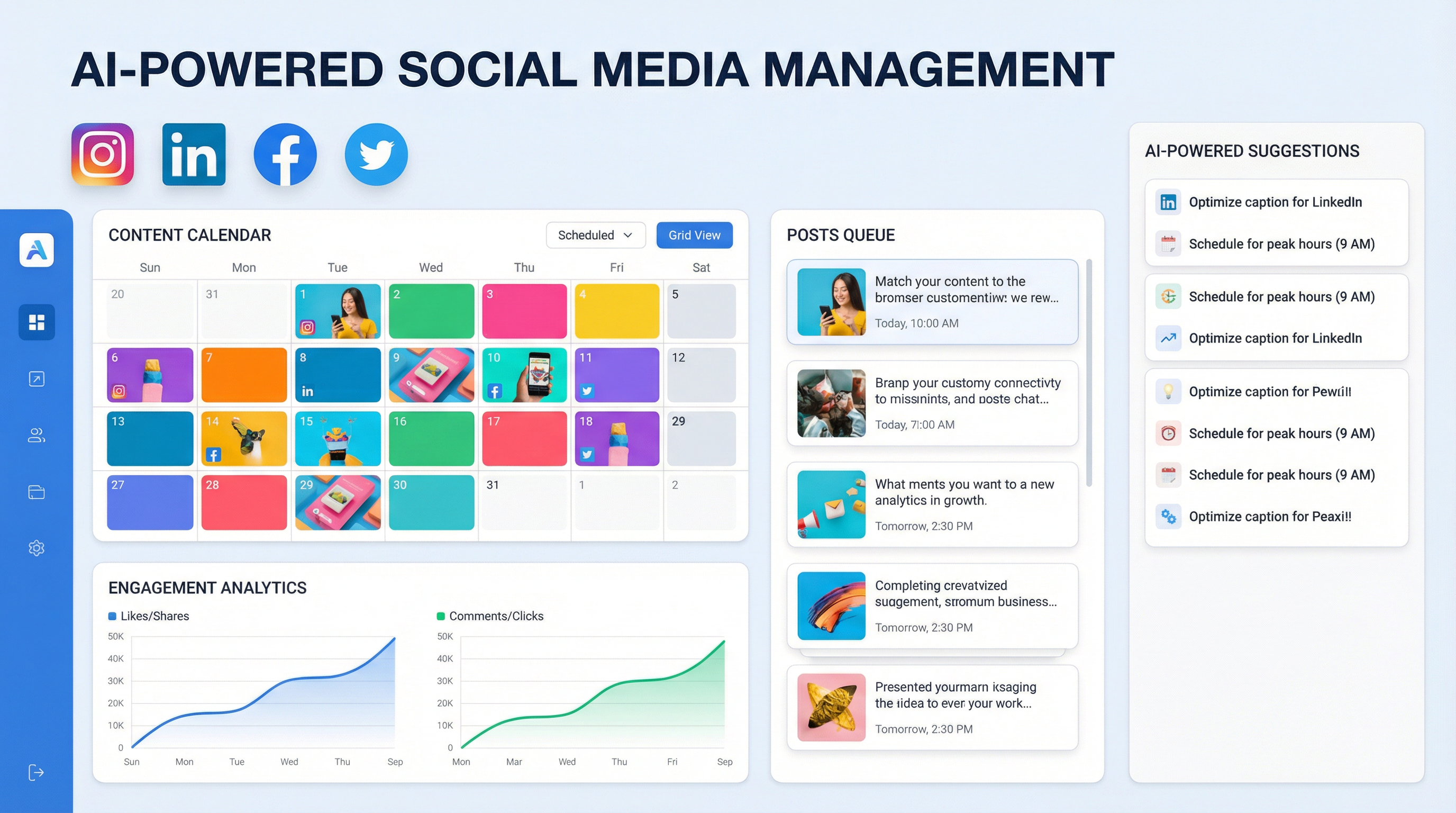
A growing e-commerce brand owner was spending 25+ hours per week manually managing social media across Instagram, Facebook, LinkedIn, and TikTok. Content creation was inconsistent, posting schedules were erratic, and the owner had no time left for actual business development. Engagement rates were dropping and they were losing ground to competitors with dedicated marketing teams.
We started with a full marketing audit — analyzing existing content performance, audience demographics, and competitor strategies over a two-week discovery phase. We mapped every manual touchpoint in their marketing workflow and identified 14 processes that could be fully automated. Together with the client, we designed a content strategy framework and built an end-to-end automation pipeline.
We deployed a comprehensive marketing automation stack: Claude and ChatGPT for content generation with brand-voice fine-tuning, Perplexity AI for trend research and competitor monitoring, Make.com for cross-platform workflow orchestration, and n8n for custom posting automations. A content calendar is auto-generated weekly using Langdock as the central AI workspace, with automated scheduling across all platforms and AI-powered hashtag optimization.
The complete marketing automation transformed the business. The owner reclaimed 25+ hours per week, content output tripled while maintaining quality, and engagement rates increased by 185% within the first three months.
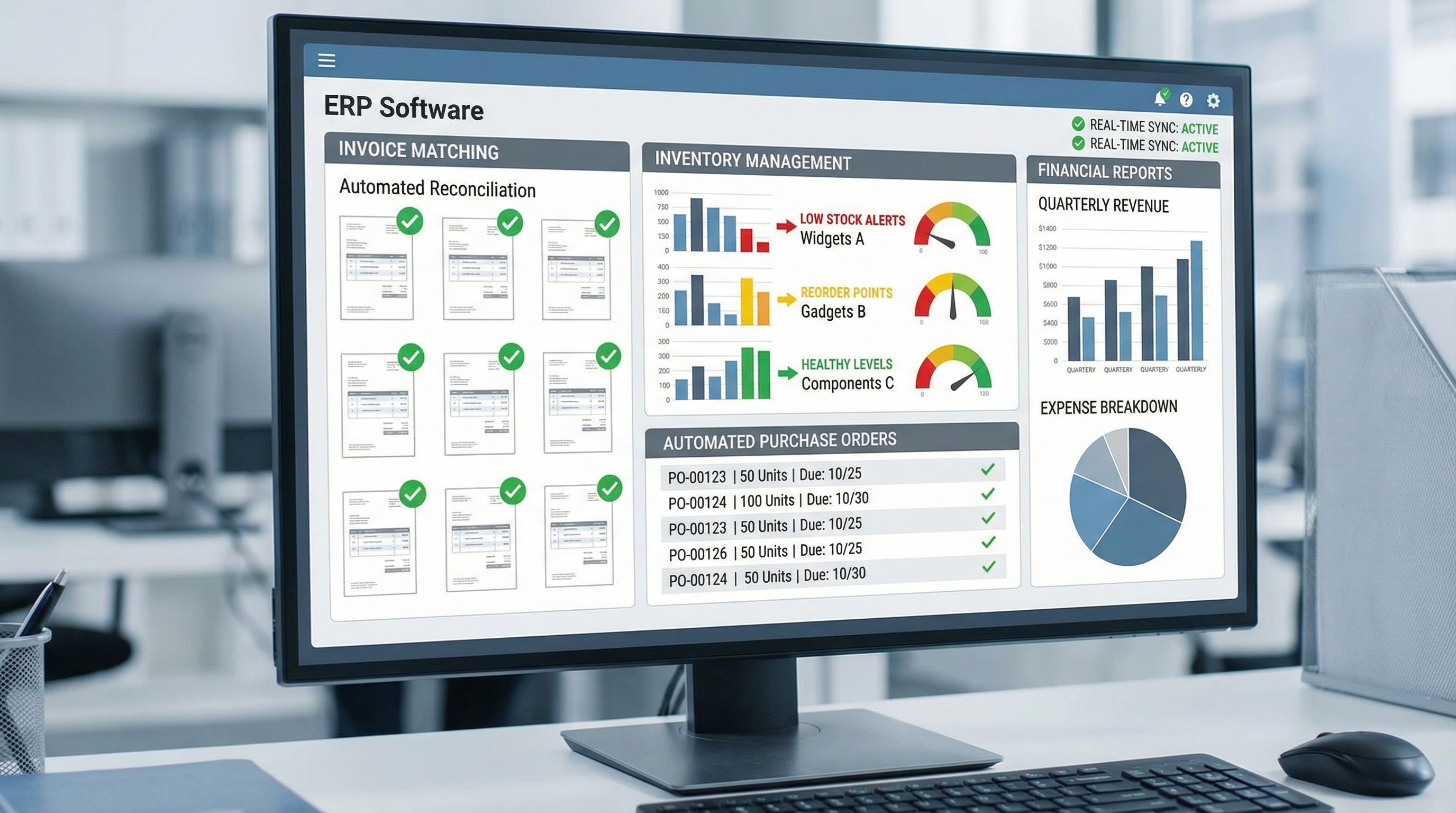
A wholesale distributor with 200+ SKUs was drowning in manual bookkeeping. Invoice matching took days, inventory counts were always off, and they'd frequently run out of bestselling products while overstocking slow-movers. The owner was spending 30 hours per week on accounting and supply chain management, and costly errors were eating into margins — an estimated €15,000/year in lost revenue from stockouts and over-ordering.
We conducted a comprehensive process mapping exercise over three weeks, documenting every step of their purchase-to-pay and order-to-cash cycles. We integrated with their existing accounting software and warehouse systems, then designed automated workflows that handle invoice receipt, matching, approval routing, and payment scheduling. For inventory, we built predictive models based on 18 months of historical sales data.
The automation stack includes: n8n workflows for invoice ingestion and OCR processing via Claude's vision capabilities, Make.com for multi-system orchestration between their accounting platform and suppliers, Abacus.AI for demand forecasting and reorder-point optimization, and a local ClawdBot instance on MacMini for on-premise document processing. Automatic PO generation triggers when inventory hits calculated thresholds, with supplier communication fully automated.
Invoice processing dropped from 3 days to 15 minutes. Stockouts decreased by 94%, and overstock was reduced by 67%. The owner now spends less than 2 hours per week on accounting oversight.
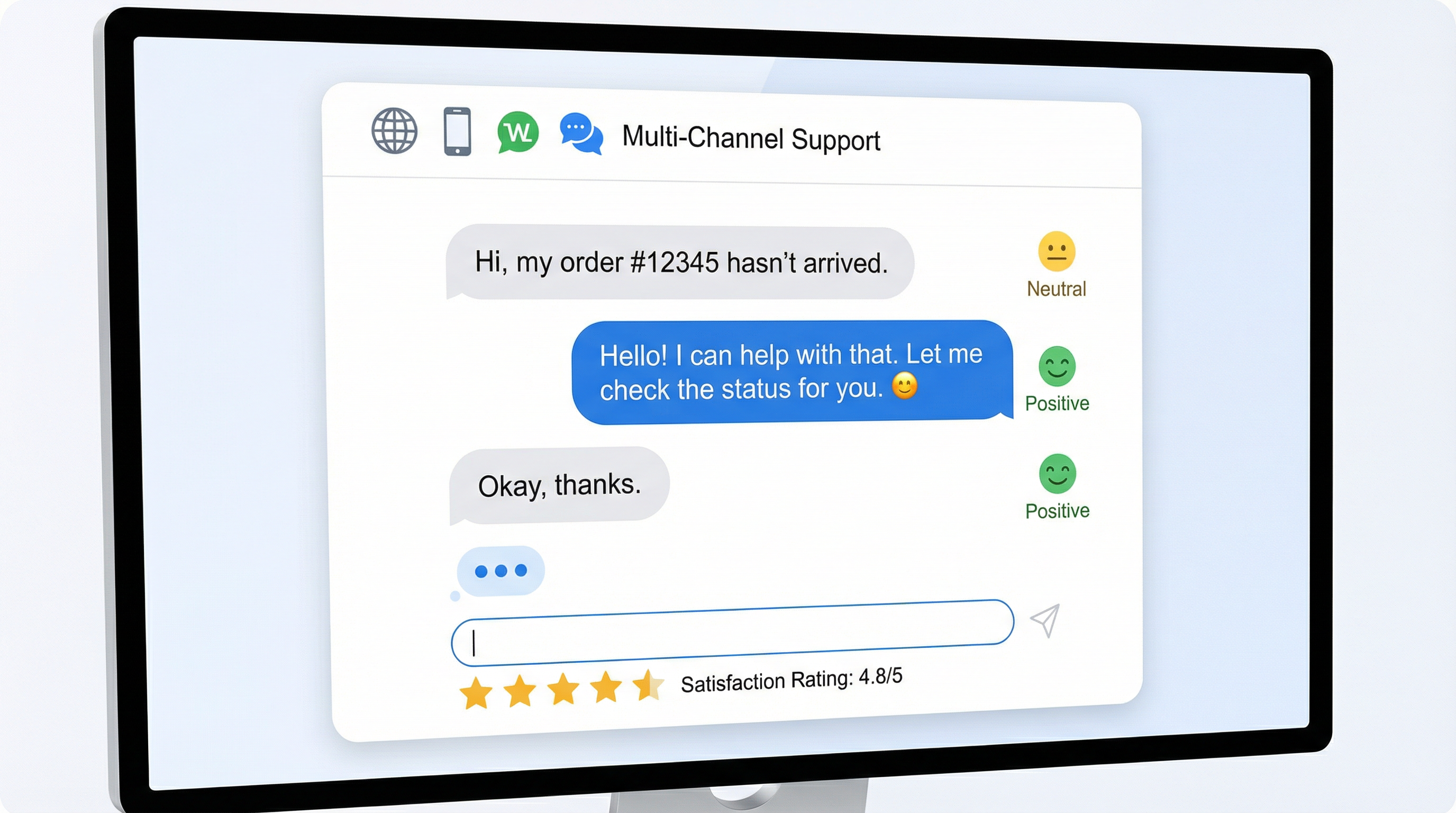
A mid-size SaaS company with 2,000+ active users was struggling with customer support. Their two-person support team was overwhelmed with 150+ tickets daily — mostly repetitive questions about billing, onboarding, and feature usage. Average response times had ballooned to 18 hours, customer satisfaction was at 62%, and churn was increasing by 3% quarter-over-quarter as frustrated users left for competitors.
We analyzed six months of support tickets, categorizing them by topic, complexity, and resolution pattern. We discovered that 73% of all tickets fell into 15 repeatable categories that could be fully automated. We then designed a tiered support system: AI handles Tier 1 instantly, escalates complex issues to humans with full context, and learns from every interaction to continuously improve.
We built a custom AI chatbot using Claude as the reasoning engine, trained on their complete knowledge base, product docs, and historical ticket resolutions. The chatbot is deployed via a Langdock workspace with n8n handling ticket routing, escalation workflows, and CRM updates. Make.com integrates with their helpdesk (Zendesk) for seamless ticket creation and status tracking. A Perplexity AI agent monitors product updates to keep the knowledge base current.
The AI chatbot now handles 78% of all support tickets without human intervention. Average response time dropped from 18 hours to under 30 seconds. Customer satisfaction jumped to 91% and churn decreased by 40%.
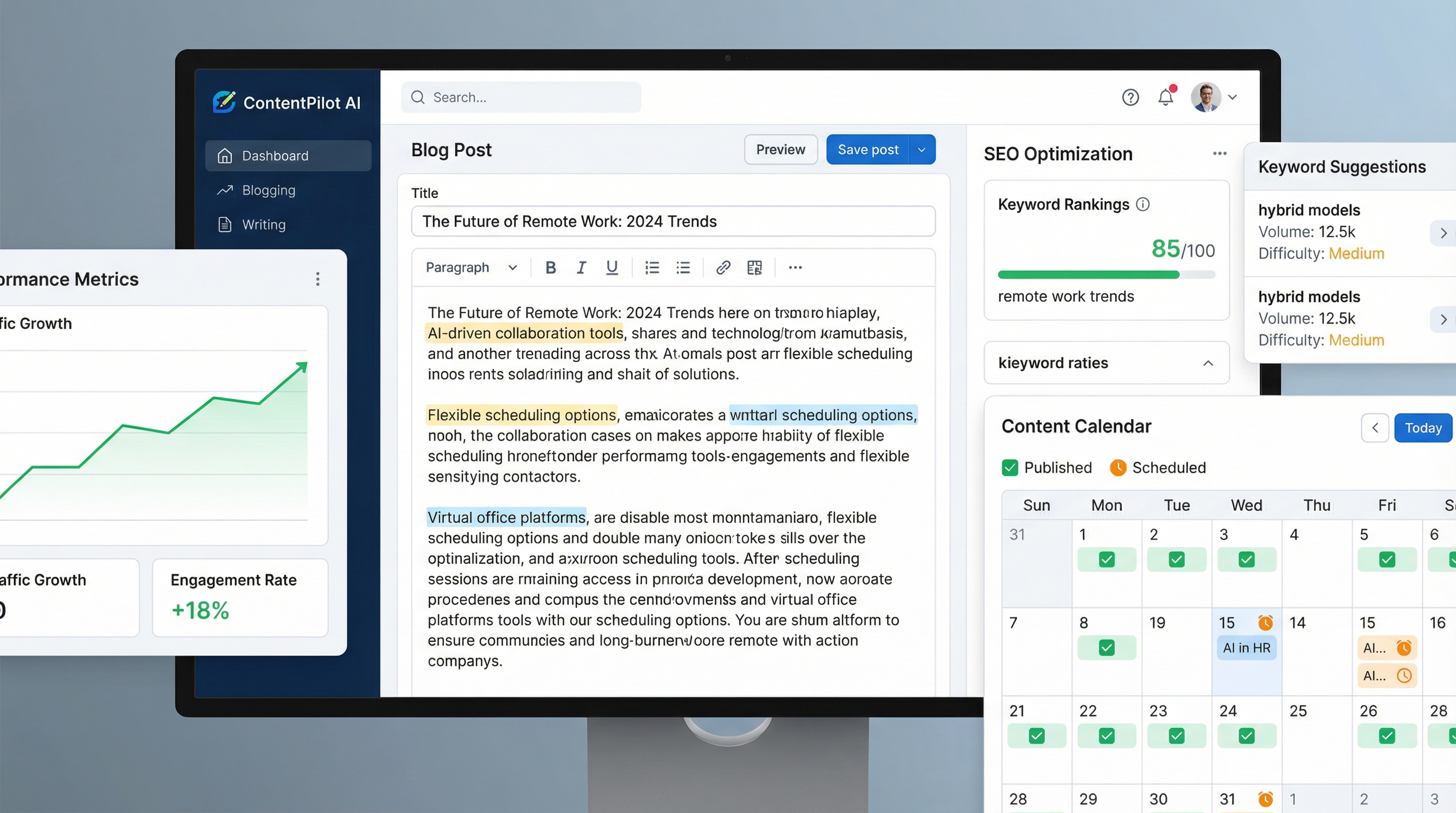
A local professional services firm (accounting & tax advisory) had zero online presence beyond a basic website. They were invisible on Google, generating no organic leads while spending €3,000/month on Google Ads with diminishing returns. Their competitors owned the first page for every relevant local search term, and the firm had no internal capacity to produce content or manage SEO — the partners were already working 60-hour weeks.
We performed a comprehensive SEO audit and competitive analysis, identifying 120+ high-value keywords with low-to-medium difficulty. We created a 12-month content strategy targeting these keywords with a mix of blog posts, landing pages, FAQ content, and local SEO optimization. The entire content pipeline — from keyword research to writing to optimization to publishing — was automated with human oversight at key checkpoints.
Perplexity AI handles ongoing keyword research and SERP analysis. Claude generates SEO-optimized long-form content with proper heading structure, internal linking, and schema markup. ChatGPT assists with meta descriptions, title tag variations, and social copy. n8n automates the entire publishing pipeline from draft to WordPress, including image optimization. Abacus.AI provides analytics dashboards tracking ranking positions, organic traffic, and conversion attribution in real-time.
Within 6 months, the firm ranked on page 1 for 34 target keywords. Organic traffic grew 820% and they cut Google Ads spend by 60% while generating more leads than before. The content pipeline produces 16 optimized articles per month with minimal human input.
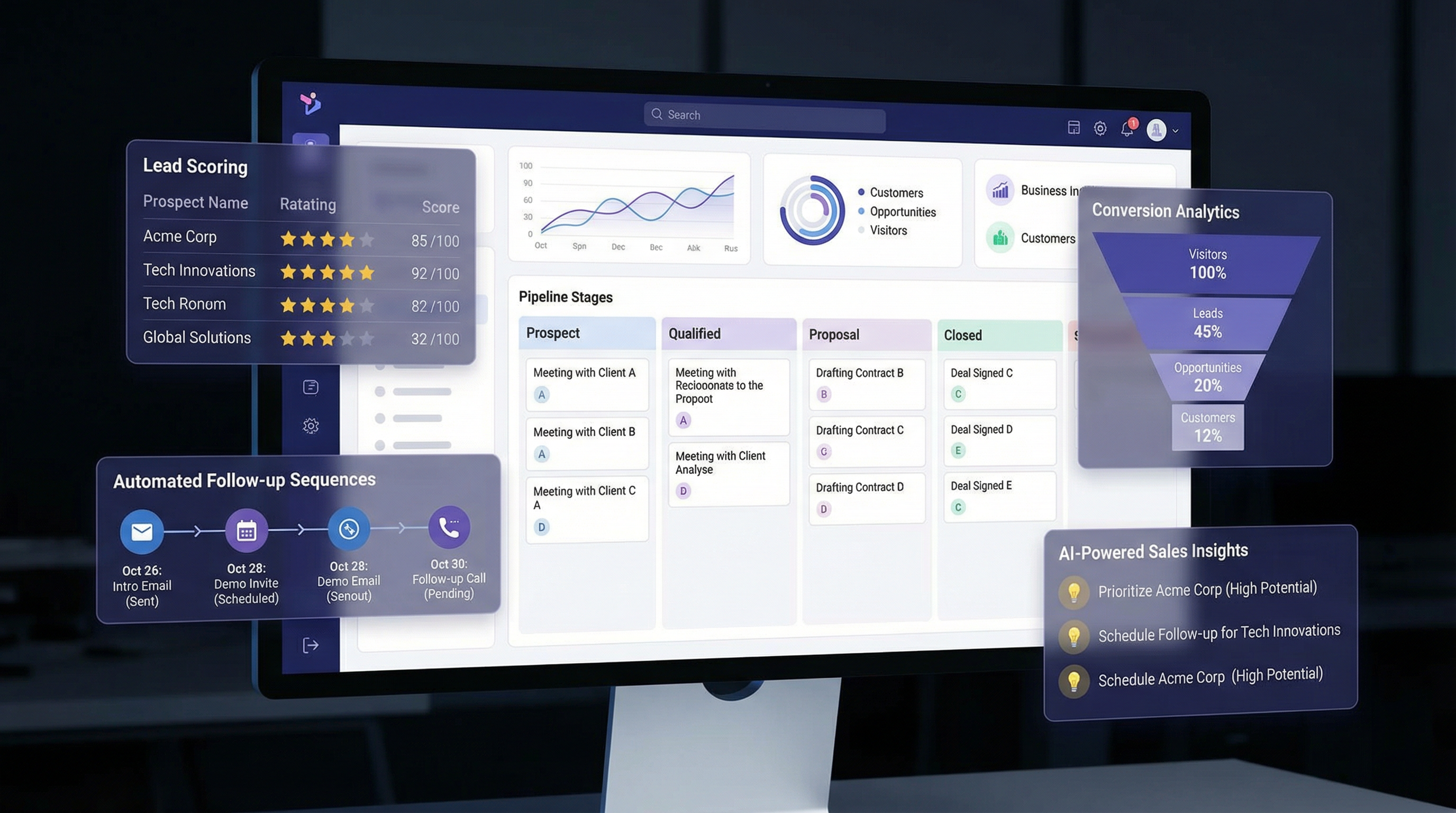
A B2B services company with a 3-person sales team was losing deals due to slow follow-ups and poor lead qualification. Leads from the website, LinkedIn, and referrals were tracked in spreadsheets — there was no unified pipeline. Sales reps spent 60% of their time on administrative tasks (data entry, email follow-ups, meeting scheduling) instead of selling. Monthly close rates had stagnated at 8% despite a healthy lead volume of 200+ per month.
We spent two weeks shadowing the sales team, documenting every step from lead capture to deal close. We identified that 67% of lost deals were due to late follow-ups (over 48 hours) and that high-quality leads were being treated the same as low-intent inquiries. We designed an AI-powered pipeline that scores, prioritizes, nurtures, and routes leads automatically — letting the sales team focus exclusively on high-value conversations.
We implemented HubSpot CRM with an AI layer built on top: Abacus.AI powers the predictive lead scoring model trained on historical deal data, Claude generates personalized follow-up email sequences based on lead behavior and industry, n8n orchestrates the automation between CRM, email, and calendar, and Make.com handles LinkedIn lead capture and enrichment. Automated meeting scheduling, proposal generation, and deal-stage updates run 24/7.
Close rate jumped from 8% to 22% within the first quarter. Average deal velocity decreased by 40% (faster closes), and the sales team now spends 80% of their time in actual sales conversations rather than admin work.

A fast-growing tech agency with 45 employees needed to hire 15 new team members in Q1 but had only one HR manager handling everything — from job posting to onboarding. Each open role attracted 150+ applications, and manually screening resumes, scheduling interviews, and coordinating with hiring managers was consuming 40+ hours per week. Time-to-hire averaged 47 days, and top candidates were accepting competing offers before interviews were even scheduled.
We mapped the entire recruitment funnel from job posting to offer letter, identifying every bottleneck. The biggest pain points were resume screening (80% of time), interview scheduling coordination (dozens of back-and-forth emails), and inconsistent candidate communication. We built an AI-powered recruitment pipeline that automates screening, scoring, scheduling, and communication while keeping the human touch for interviews and final decisions.
Claude processes incoming resumes and cover letters, scoring candidates against role-specific criteria with detailed reasoning. n8n orchestrates the workflow: top candidates receive automated interview scheduling links (Calendly integration), rejection emails are personalized and sent automatically, and hiring managers get ranked shortlists with AI-generated summaries. Langdock serves as the HR team's AI workspace for generating job descriptions, interview questions, and offer letters. Make.com syncs everything with their HRIS.
Time-to-hire dropped from 47 days to 18 days. The HR manager reclaimed 30+ hours per week, and candidate experience scores improved dramatically. All 15 positions were filled within Q1 with a 93% new-hire retention rate at 6 months.
A multi-location retail chain (8 stores) was making decisions based on gut feeling. Financial data lived in QuickBooks, sales data in their POS system, marketing metrics in Google Analytics, and inventory in a separate warehouse system. The owner spent every Sunday building manual Excel reports — a 6-hour ritual that still only provided a rear-view mirror of last week. They had no forecasting capability and couldn't identify trends until it was too late to act on them.
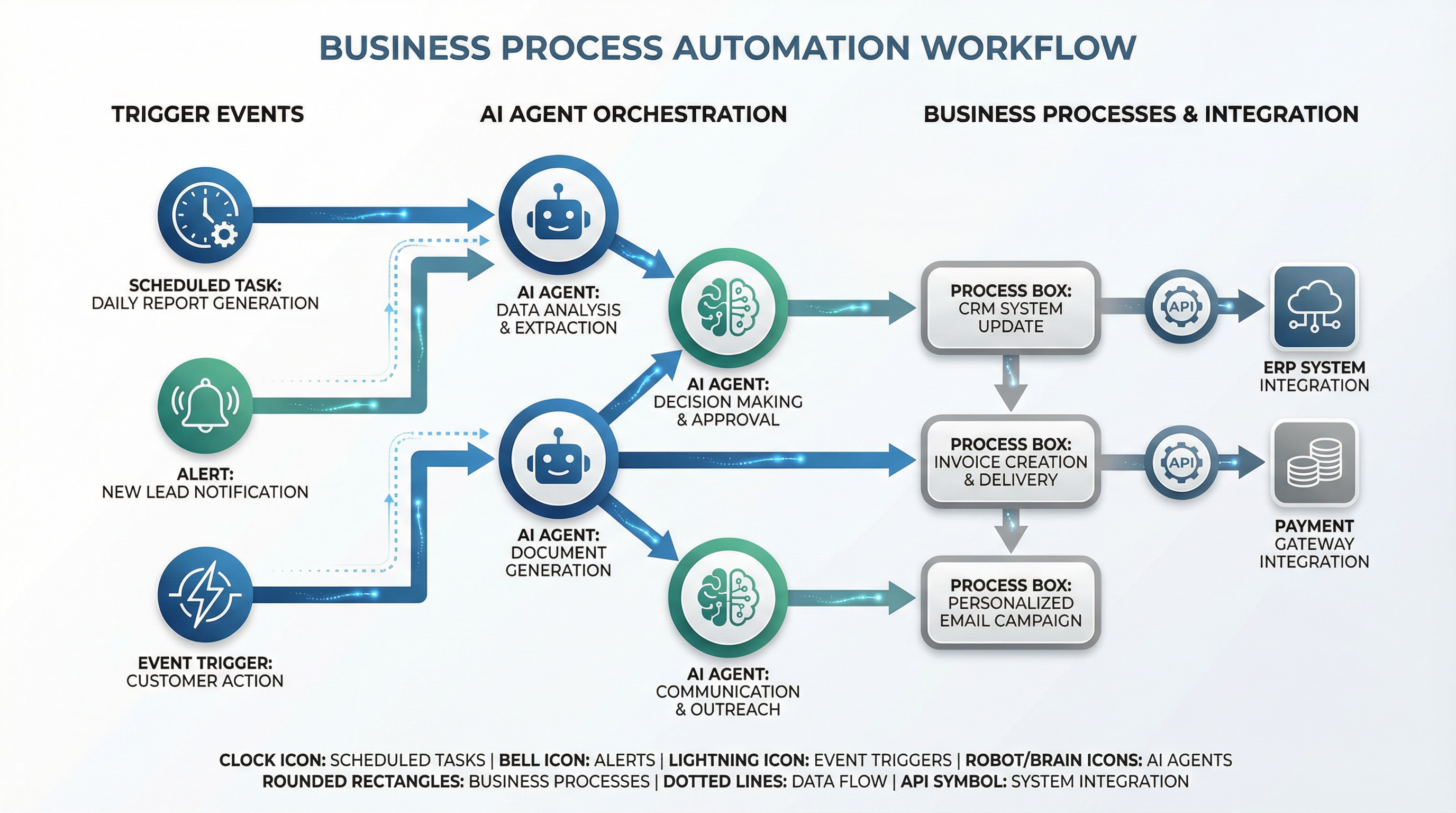
We conducted a data infrastructure audit, cataloging every data source, format, and update frequency. We then designed a unified data pipeline that consolidates all business data into a single source of truth, with automated reporting that generates insights — not just numbers. The key differentiator: we didn't just build dashboards, we built an AI analyst that proactively surfaces anomalies, trends, and recommendations.
Abacus.AI serves as the analytics backbone — ingesting data from all sources, building predictive models for demand forecasting, and generating automated anomaly detection alerts. n8n handles the ETL pipelines, pulling data from QuickBooks, Shopify POS, Google Analytics, and the WMS on scheduled intervals. Claude generates weekly executive summary reports in natural language, highlighting key insights and actionable recommendations. A local ClawdBot on MacMini processes sensitive financial documents on-premise for compliance.
The owner went from 6 hours of Sunday reporting to a 5-minute AI-generated briefing delivered to their inbox every Monday at 7am. Predictive analytics identified a seasonal demand shift 3 weeks early, saving €22,000 in potential overstock. Overall profit margins improved by 12% in the first quarter through data-driven decision making.